
What is milk fever (hypocalcaemia)?
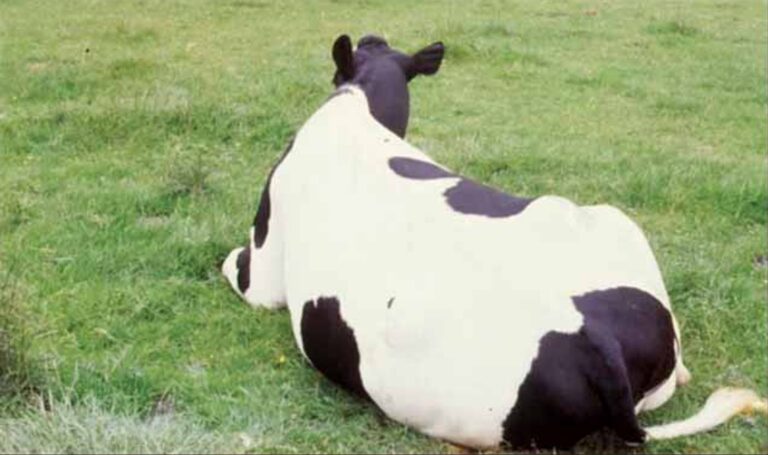
Milk fever, or hypocalcaemia, is a metabolic condition of cows caused by low blood calcium around the time of calving. As colostrum and milk production begin, a cow’s demand for calcium rises sharply. If she cannot absorb or mobilise calcium quickly enough, blood calcium levels fall, affecting muscle and nerve function.
Milk fever occurs in two forms: – Clinical milk fever – obvious signs such as weakness, difficulty standing or a down cow; and subclinical hypocalcaemia – no dramatic signs, but calcium levels are still below optimal and lead to suboptimal bodily function.
Irish research and transition‑cow guidance from UCD has highlighted that subclinical hypocalcaemia is common, even on farms where clinical milk fever appears well controlled. These hidden cases can have important knock‑on effects in early lactation for cow health and lead to transition cow disorders such as reduced appetite, retained placenta, metritis/endometritis, ketosis, and displaced abomasum.
Why hypocalcaemia matters after calving
Low calcium does not just affect the cow’s ability to stand. Reduced blood calcium has been associated with: – Lower feed intake after calving – Weaker immune response in early lactation – Increased risk of transition cow disorders such as retained placenta, metritis and ketosis – Slower recovery and reduced performance in early lactation
This is why many vets, nutritionists and farmers focus on supporting calcium status in the first 24–48 hours after calving, when demand is highest.
Why calcium drops at calving
At calving, the cow must rapidly adapt her metabolism to meet calcium demand by: 1. Increasing calcium absorption from the gut 2. Mobilising calcium from bone reserves 3. Conserving calcium via the kidneys.
These processes take time to fully activate. During this adjustment period, cows are vulnerable to hypocalcaemia — particularly older cows, high‑yielding cows and cows that have had milk fever before.
Key risk factors on Irish dairy farms
A publication by FJ Mulligan & ML Doherty (2008) on transition cow management in Irish grazing systems highlights several practical risk factors for hypocalcaemia and subclinical hypocalcaemia on Irish dairy farms:
Body Condition Score at calving
Cows that are over‑conditioned or under‑conditioned at calving are more likely to struggle metabolically. Consistent BCS across the herd is a key prevention measure.
Magnesium supply
Magnesium plays a critical role in calcium metabolism. Inadequate magnesium intake before and after calving can reduce the cow’s ability to maintain normal blood calcium levels.
High potassium forages
High potassium grass silage can interfere with mineral balance and calcium regulation. This makes forage mineral analysis and dry‑cow diet formulation particularly important in Irish systems.
Where do boluses for cows fit in after calving?
Oral calcium boluses are used as a targeted tool to support cows during the period of highest calcium demand.
They are designed to: – Provide a rapid source of calcium immediately after calving – Help maintain blood calcium levels during the first critical hours – Support cows that are at higher risk of hypocalcaemia
Boluses are not a replacement for good dry‑cow nutrition, but they can be an effective addition to a well‑managed transition programme.
CowStart Complete: evidence‑based calcium support
CowStart Complete is an oral bolus formulated to support calcium status in cows after calving. Peer‑reviewed research by John Lawlor (Anchor Life Science), working with UCD collaborators, has evaluated bolus supplementation in Irish seasonal‑calving herds.
Published studies have reported that: – CowStart provides a known, standardised supply of calcium and magnesium per bolus – Supplemented cows showed improved metabolic status in early lactation compared with unsupplemented controls – In some studies, cows receiving a combined calcium, magnesium and antioxidant bolus showed better energy balance and higher milk yield than control cows, although milk yield responses are not always observed
These findings support the use of CowStart Complete as a targeted post‑calving support tool, particularly in higher‑risk cows.
Which cows should receive a calcium bolus after calving?
Boluses are most commonly used on a risk‑based approach:
Higher‑risk cows
- Third lactation and older
- Cows with a history of milk fever
- High‑yielding cows
- Cows that calved twins or had a difficult calving
Lower‑risk cows
- First and second calvers
- Cows with good body condition and strong appetite post‑calving
- Herds with well‑balanced dry‑cow mineral diets.
Your herd vet or nurtritionist can help refine a protocol that suits your farm.
When and how to give CowStart Complete
Most on‑farm protocols based on published research and product guidance use: – Give two boluses at calving, in higher‑risk cows
This timing is designed to support calcium levels through the peak risk period in the first two days after calving.
Milk fever prevention: the bigger picture
Boluses work best when combined with: – Appropriate dry‑cow mineral supplementation – Adequate magnesium intake – Controlled potassium levels in dry‑cow diets – Consistent body condition management
Milk fever prevention starts before calving, with boluses acting as short‑term support when demand is highest.
Frequently Asked Questions (FAQ)
When should I give a milk fever bolus?
Give CowStart Complete at calving (or near calving) to cows at risk of subclinical hypocalcaemia.
Are calcium boluses suitable for spring-calving herds in Ireland?
Yes. Most research on CowStart has been carried out in Irish seasonal‑calving dairy systems.
Can I give boluses to all cows?
Some farms use blanket supplementation, but research suggests boluses are most effective when used strategically on higher‑risk cows.
Do boluses replace good dry cow minerals?
No. Boluses are a short‑term support and should be used alongside a well‑designed dry‑cow nutrition program.
Where can I buy calcium boluses for cows?
You can purchase CowStart Complete calcium boluses for cows on https://www.reprovet.ie/product/cowstart-calcium-boluses/. For larger orders and to get the best price on CowStart Complete you can send your enquiry to info@reprovet.ie directly.
Who sells CowStart Complete in Ireland?
ReproVet Ireland, a long-standing advocate for the benefits of CowStart on dairy cow health, sell CowStart Complete calcium boluses.